
Message to our Friends the Jehovah's Witnesses No. 2
Content
Introduction
Dear friends — Jehovah's Witnesses — we greet you in the name of our Lord and Saviour Jesus Christ. We are grateful for the privilege that the Lord Jesus Christ gives us to write to you once again about the Truth. Yes, dear friends, by the grace of our Saviour Jesus Christ, we write to you in this second message concerning another Truth that the Jehovah's Witnesses organization is hiding from you: the immortality of the soul and Hell.
Dear friends, you are taught within your organization that the soul is mortal and that Hell is equivalent to the grave. The Jehovah's Witnesses organization has long taught you that the body is the soul — and that when the body dies, the soul dies with it, that is, it is destroyed. Concerning the wicked, for example, the organization teaches you that they will be destroyed and not preserved eternally for torment; that they will be as though they had never existed; that they will be exterminated. All these teachings are false and devoid of meaning. And this very fact is proven by the Bible — the New World Translation published by the organization itself.
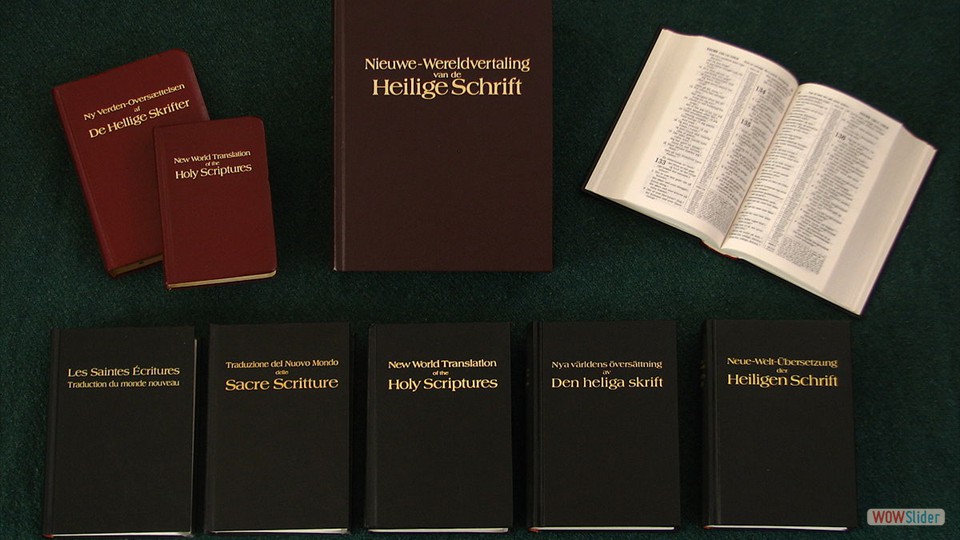
Indeed, although the organization took measures — through the 2013 revised edition — to conceal the Truth by further falsifying the Scriptures, most notably by removing verses and replacing certain original terms such as "soul" with "life" and "Sheol" with "grave," you will nonetheless see that the Truth remains the Truth and cannot be altered. We will make use of this 2013 revised edition alongside the 1984 reference edition, as well as the latest 2018 French edition for certain passages. These represent different editions of the Bible published by the organization. Without further delay, let us discover what the New World Translation actually tells us concerning the immortality of the soul.
The Immortality of the Soul as Explained by the New World Translation
Let us begin by examining Genesis 4:8–10.
Genesis 4:8–10 (2013 Edition)
8After that Cain said to his brother Abel: “Let us go over into the field.” So while they were in the field, Cain assaulted his brother Abel and killed him. 9Later on, Jehovah said to Cain: “Where is your brother Abel?” and he said: “I do not know. Am I my brother’s guardian?” 10At this He said: “What have you done? Listen! Your brother’s blood is crying out to me from the ground.
Genesis 4:8-10 (1984 Edition)
8After that Cain said to Abel his brother: [“Let us go over into the field.”] So it came about that while they were in the field Cain proceeded to assault Abel his brother and kill him. 9Later on Jehovah said to Cain: “Where is Abel your brother?” and he said: “I do not know. Am I my brother’s guardian?” 10At this he said: “What have you done? Listen! Your brother’s blood is crying out to me from the ground.
Dear friends, this passage from Genesis 4 recounts the story of the two brothers you know as Cain and Abel — how Cain killed his brother Abel. It is instructive to observe what happened after Abel was killed by his brother. At verse 10, Jehovah through His New World Translation informs us of what took place after Abel's death. After the death of Abel, the New World Translation reveals to us that Abel's blood was crying out from the ground toward Jehovah — even though Abel was dead. How can this be possible? How can one explain that the blood of a man continues to cry out or lament even though the person has already died? Is the blood the body? Of course not! Blood is found within the body. After being killed by his brother, Abel's body became lifeless — his body was destined to decompose and be destroyed. How then do we explain that his blood continued to cry out after his death? What is the blood? The New World Translation gives us the answer in all truth.
Deuteronomy 12:23 (2013 Edition)
Just be firmly resolved not to eat the blood, because the blood is the life, and you must not eat the life with the flesh.
Deuteronomy 12:23 (1984 Edition)
Simply be firmly resolved not to eat the blood, because the blood is the soul and you must not eat the soul with the flesh.
Deuteronomy 12:23 (NWT French - 2018)
Toutefois, sois fermement résolu à ne pas manger le sang, car le sang, c’est l’âme, et tu ne devras pas manger l’âme avec la chair
There is the Truth! The blood is the life — the soul. The French edition of the NWT explicitly uses the term soul (l'âme). If therefore the blood of Abel continued to cry out to Jehovah after he had died, this simply means that his soul was very much alive after his death — since the blood is the soul according to the Word of Jehovah (Deuteronomy 12:23) that we have just read. Dear friends, you therefore understand that after the death of a person, his soul continues to live. The soul is therefore not mortal as you are taught in that satanic organization — the Jehovah's Witnesses. The soul NEVER dies; it is immortal.
There are many other examples that the Word of Jehovah — the New World Translation — gives us concerning the immortality of the soul. Let us see the example from the book of Revelation.
Revelation 6:9–10 (2013 Edition)
9When he opened the fifth seal, I saw underneath the altar the souls of those slaughtered because of the word of God and because of the witness they had given. 10They shouted with a loud voice, saying: “Until when, Sovereign Lord, holy and true, are you refraining from judging and avenging our blood on those who dwell on the earth?”
Revelation 6:9-10 (1984 Edition)
9And when he opened the fifth seal, I saw underneath the altar the souls of those slaughtered because of the word of God and because of the witness work that they used to have. 10And they cried with a loud voice, saying: “Until when, Sovereign Lord holy and true, are you refraining from judging and avenging our blood upon those who dwell on the earth?”
What is the Word of Jehovah speaking of here? It speaks of the souls of persons who had been killed because of the Word of God — these are therefore the souls of dead persons. The question we must ask is: what were these souls doing? At verse 10, the Word tells us that these souls were crying out in a loud voice to God — exactly as the soul (blood) of Abel had done. These souls were crying out to God so that He might judge those who had killed them. Dear friends, if the soul is mortal or is destroyed together with the body, how then do you explain the cries of the souls of these persons who were killed for the Word of God? The soul can never die — it is immortal.
Let us take another example from the New World Translation that demonstrates that the soul is entirely distinct from the body and is immortal.
Acts 20:8–10 (2013 Edition)
8So there were quite a few lamps in the upper room where we were gathered together. 9Seated at the window, a young man named Eutychus sank into a deep sleep while Paul kept talking, and overcome by sleep, he fell down from the third story and was picked up dead. 10But Paul went downstairs, threw himself on him and embraced him, and said: “Stop making a commotion, for he is alive.”
Acts 20:8-10 (1984 Edition)
8So there were quite a few lamps in the upper chamber where we were gathered together. 9Seated at the window, a certain young man named Eutychus fell into a deep sleep while Paul kept talking on, and, collapsing in sleep, he fell down from the third story and was picked up dead. 10But Paul went downstairs, threw himself upon him and embraced him and said: “STOP raising a clamor, for his soul is in him.”
Dear friends, ask yourselves why Paul said "his soul is in him" after the young man Eutychus had been picked up dead. In fact, Paul used this kind of language because he knew in advance that after the death of a person, that person's soul is destined to leave the body — to abandon the body. Through this passage, dear friends, Jehovah shows us clearly that the soul is distinct from the body, and that at a person's death, the soul is destined to leave the body. Let us take one final example where Jehovah shows us that the soul is distinct from the body and that it is immortal.
2 Corinthians 5:6–8 (2013 Edition)
6So we are always of good courage and know that while we have our home in the body, we are absent from the Lord, 7for we are walking by faith, not by sight. 8But we are of good courage and would prefer to be absent from the body and to make our home with the Lord.
2 Corinthians 5:6-8 (1984 Edition)
6We are therefore always of good courage and know that, while we have our home in the body, we are absent from the Lord, 7for we are walking by faith, not by sight. 8But we are of good courage and are well pleased rather to become absent from the body and to make our home with the Lord.
What do we observe here? We observe clearly the ardent desire Paul has to leave his body. He even says that as long as we live in the body, we are away from the Lord. From this, dear friends, we understand that the body is nothing other than the vessel in which the true person dwells — and this true person is none other than the soul (Job 10:11).
Job 10:11 (2013 Edition)
With skin and flesh you clothed me, And with bones and sinews you wove me together.
Job 10:11 (1984 Edition)
With skin and flesh you proceeded to clothe me And with bones and sinews to weave me together.
What else does the Lord teach us in this passage? He teaches us that in order to make our home with Him, it is necessary for us to be absent from the body. What does it mean to be absent from the body? It simply means leaving or abandoning the body. If therefore we must leave this body in order to dwell with the Lord, what is it within us that can go and dwell with the Lord? The soul is distinct from the body; it is the soul that is destined to live eternally with the Lord. The body counts for nothing — it will not cause us to live with the Lord, for it is mortal.
Hell and Paradise as Explained by the New World Translation
Job 14:7–10 (2013 Edition)
7For there is hope even for a tree. If it is cut down, it will sprout again, And its twigs will continue to grow. 8If its root grows old in the groundAnd its stump dies in the soil, 9At the scent of water it will sprout; And it will produce branches like a new plant. 10But a man dies and lies powerless; When a human expires, where is he?
Job 14:7-10 (1984 Edition)
7For there exists hope for even a tree.If it gets cut down, it will even sprout again, And its own twig will not cease to be. 8If its root grows old in the earthAnd in the dust its stump dies, 9At the scent of water it will sprout And it will certainly produce a bough like a new plant. 10But an able-bodied man dies and lies vanquished; And an earthling man expires, and where is he?
Dear friends, having discovered that the soul of a person never dies — that it continues to live even though the person has died — let us now discover where it goes. The man taken from the ground (Genesis 2:7) dies or expires — and where is he? In other words, where does his soul go?
Psalm 16:10 (2013 Edition)
For you will not leave me in the Grave. You will not allow your loyal one to see the pit.
Psalm 16:10 (1984 Edition)
For you will not leave my soul in Sheol. You will not allow your loyal one to see the pit.
Job 33:21–22 (2013 Edition)
21His flesh wastes away from sight, And his bones that were hidden now protrude. 22His soul draws near to the pit; His life to those who bring death.
Job 33:21-22 (1984 Edition)
21His flesh wastes away from sight,And his bones that were not seen certainly grow bare. 22And his soul draws near to the pit, And his life to those inflicting death.
Dear friends, as you have just read: the souls of all who die go to the Sheol or Pit. Note that according to these passages, the Sheol and the Pit represent the same thing — the Sheol equals the Hades equals the Pit. And this is where the souls of all who died — both the righteous and the wicked — went before the resurrection and ascension of Jesus Christ. Where, then, is the Sheol or the Pit located?
Numbers 16:31–33 (2013 Edition)
31As soon as he finished speaking all these words, the ground beneath them split apart. 32 And the earth opened and swallowed them up, along with their households and everyone who belonged to Korah and all their goods. 33 So they and all who belonged to them went down alive into the Grave, and the earth covered them over, so that they perished from the midst of the congregation.
Numbers 16:31-33 (1984 Edition)
31And it came about that as soon as he had finished speaking all these words, the ground that was under them began to be split apart. 32And the earth proceeded to open its mouth and to swallow up them and their households and all humankind that belonged to Korah and all the goods. 33So down they went, and all who belonged to them, alive into Sheol, and the earth went covering them over, so that they perished from the midst of the congregation.
Numbers 16:31-33 (NWT French - 2018)
31Et voici ce qui arriva : dès qu’il eut achevé de dire toutes ces paroles, le sol qui était sous eux commença à se fendre. 32Et la terre ouvrit sa bouche et les engloutit, eux et leurs maisonnées, ainsi que tous les humains qui appartenaient à Qorah, et tous les biens. 33Ainsi ils descendirent vivants au shéol, eux et tous ceux qui leur appartenaient, et la terre les recouvrit, si bien qu’ils disparurent du milieu de la congrégation
What does the Word of Jehovah teach us here? Jehovah, through His New World Translation, tells us that the Sheol is beneath the earth. This does not refer to the grave, as was very poorly interpreted in the 2013 edition in an attempt to stifle this truth. The 1984 Edition and the French version are proof of this; for what grave or cemetery could receive an entire company of people together with all their possessions and households? Furthermore, in order to end up in a grave, one must normally die beforehand — which is not the case with Korah and his people. The earth opened its mouth and they went down alive into the Sheol. Understand therefore that Jehovah is speaking of a place found in the depths of the earth that receives the souls of men after their death.
Before the Resurrection and Ascension of Jesus Christ, the Sheol or Hades was divided into two sections. On one side, the place of rest called Abraham's bosom — for those who had faith in God. On the other side, the place of torments and suffering for sinners and the wicked. These two sections were separated by a great chasm. We find this in the Bible.
Luke 16:19–26 (2013 Edition)
19“There was a rich man who used to dress in purple and linen, enjoying himself day after day with magnificence. 20 But a beggar named Lazarus used to be put at his gate, covered with ulcers 21 and desiring to be filled with the things dropping from the table of the rich man. Yes, even the dogs would come and lick his ulcers. 22 Now in the course of time, the beggar died and was carried off by the angels to Abraham’s side. “Also, the rich man died and was buried. 23 And in the Grave he lifted up his eyes, being in torment, and he saw Abraham from afar and Lazarus by his side. 24 So he called and said, ‘Father Abraham, have mercy on me, and send Lazarus to dip the tip of his finger in water and cool my tongue, for I am in anguish in this blazing fire.’ 25 But Abraham said, ‘Child, remember that you had your fill of good things in your lifetime, but Lazarus for his part received bad things. Now, however, he is being comforted here, but you are in anguish. 26 And besides all these things, a great chasm has been fixed between us and you, so that those who want to go over from here to you cannot, neither may people cross over from there to us.’
Luke 16:19-26 (1984 Edition)
19 “But a certain man was rich, and he used to deck himself with purple and linen, enjoying himself from day to day with magnificence. 20 But a certain beggar named Lazarus used to be put at his gate, full of ulcers 21 and desiring to be filled with the things dropping from the table of the rich man. Yes, too, the dogs would come and lick his ulcers. 22 Now in course of time the beggar died and he was carried off by the angels to the bosom [position] of Abraham. “Also, the rich man died and was buried. 23And in Hades he lifted up his eyes, he existing in torments, and he saw Abraham afar off and Lazarus in the bosom [position] with him. 24So he called and said, ‘Father Abraham, have mercy on me and send Lazarus to dip the tip of his finger in water and cool my tongue, because I am in anguish in this blazing fire.’ 25But Abraham said, ‘Child, remember that you received in full your good things in your lifetime, but Lazarus correspondingly the injurious things. Now, however, he is having comfort here but you are in anguish. 26And besides all these things, a great chasm has been fixed between us and YOU people, so that those wanting to go over from here to YOU people cannot, neither may people cross over from there to us.’
After the Death and Resurrection of Jesus Christ, all those who were in Abraham's bosom — that section of the Hades — were rescued from the Hades by the Lord Jesus Christ (Revelation 1:18; Ephesians 4:7–10), who brought them to Paradise. From that point onward, the Sheol or Hades is reserved solely for the souls of those who have no faith in Jesus Christ — for sinners. The souls of those who have faith in Jesus Christ no longer go to the Hades after their death, but directly to the Paradise of God — to heaven.
2 Corinthians 12:2–4 (2013 Edition)
2 I know a man in union with Christ who, 14 years ago—whether in the body or out of the body, I do not know; God knows—was caught away to the third heaven. 3 Yes, I know such a man—whether in the body or apart from the body, I do not know; God knows— 4 who was caught away into paradise and heard words that cannot be spoken and that are not lawful for a man to say.
Luke 23:42–43 (2013 Edition)
42 Then he said: “Jesus, remember me when you get into your Kingdom." 43 And he said to him: “Truly I tell you today, you will be with me in Paradise.”
Dear friends, I trust that by now you have understood that the soul of a person has only two places where it can go: either to Paradise — to heaven — or into the Hades beneath the earth. Now, as you have no doubt observed in Luke 16:19–26 that we read above, the Hades is characterized by suffering and torment; the Hades is characterized by a fire that burns the soul. This is what Hell is. By examining Luke 16:19–26, you can clearly see that we are speaking of torments and blazing fire in which the rich man suffers. If therefore the Hades is merely a grave, then where do this blazing fire and these torments in the Hades come from? And why torments and blazing fire in the Hades, if it is nothing more than a grave? Why does the rich man continue to suffer in the Hades after his death if it were nothing but a grave?
Dear friends, understand that the souls of all sinners — of all those who deny the divinity of Jesus Christ and the salvation He offers them — will share the same fate as Satan: the Sheol, a place of eternal torments.
Isaiah 14:12–15 (2013 Edition)
12 How you have fallen from heaven, O shining one, son of the dawn! How you have been cut down to the earth,You who vanquished nations! 13 You said in your heart, ‘I will ascend to the heavens. Above the stars of God I will lift up my throne, And I will sit down on the mountain of meeting, In the remotest parts of the north. 14 I will go up above the tops of the clouds; I will make myself resemble the Most High.’ 15Instead, you will be brought down to the Grave, To the remotest parts of the pit.
Isaiah 14:12–15 (1984 Edition)
12 “O how you have fallen from heaven, you shining one, son of the dawn! How you have been cut down to the earth you who were disabling the nations! 13 As for you, you have said in your heart, ‘To the heavens I shall go up. Above the stars of God I shall lift up my throne, and I shall sit down upon the mountain of meeting, in the remotest parts of the north. 14 I shall go up above the high places of the clouds; I shall make myself resemble the Most High.’ 15 “However, down to Sheol you will be brought, to the remotest parts of the pit.
Who is the son of the dawn? Who sought in his pride to be like the Most High? It is, of course, satan. And after his rebellion, where was he cast? Verse 15 gives us the answer: into the Sheol. If therefore the Sheol or Hades is a grave, this amounts to saying that the devil — Satan — was also cast into a grave. What folly! One would have to be utterly senseless — completely devoid of intelligence — to believe that Hell is equivalent to a grave. One would have to be truly foolish to swallow such nonsense. If therefore the Sheol or Hades corresponds to the grave, this means that Satan and his angels will not be tormented eternally in fire and sulfur.
Understand this once and for all, dear friends: the soul of every sinner — of all those who deny the divinity of Jesus Christ — will suffer eternally in the lake of fire and sulfur alongside Satan and his angels. Yes, eternally — and the New World Translation itself proves this.
Matthew 25:41 (2013 Edition)
“Then he will say to those on his left: ‘Go away from me, you who have been cursed, into the everlasting fire prepared for the Devil and his angels.
Revelation 20:10 (2013 Edition)
And the Devil who was misleading them was hurled into the lake of fire and sulfur, where both the wild beast and the false prophet already were; and they will be tormented day and night forever and ever.
If, as the Jehovah's Witnesses organization teaches, the wicked will be destroyed and not preserved eternally for torment — that they will be as though they had never existed, that they will be exterminated — then what are the wild beast (the Antichrist, a political man) and the false prophet (a man, a religious leader) doing in the lake of fire and sulfur where they are tormented day and night, forever and ever?
As highlighted above, one would have to be utterly senseless to believe that eternal punishment does not exist, on the pretext that God is too loving to send people to Hell. God is love — but He is also just; He gives to each according to his works, and He does not leave the sinner unpunished. Let us first read the following passages.
Jeremiah 17:10 (2013 Edition)
I, Jehovah, am searching the heart, Examining the innermost thoughts, To give to each one according to his ways, According to the fruitage of his works.
Nahum 1:2–3 (2013 Edition)
2 Jehovah is a God who requires exclusive devotion and takes vengeance;Jehovah takes vengeance and is ready to express his wrath. Jehovah takes vengeance against his foes, And he stores up wrath for his enemies. 3 Jehovah is slow to anger and great in power, But by no means will Jehovah hold back due punishment. His path is in destructive wind and storm, And the clouds are the dust of his feet.
Hebrews 10:30 (2013 Edition)
For we know the One who said: “Vengeance is mine; I will repay.” And again: “Jehovah will judge his people.”
Yes, Jehovah is love — but He is also just, and He punishes iniquity and the sinner. All those who are presently in the Hades will be cast into the lake of fire and sulfur — and that is eternal suffering.
Revelation 20:14–15 (2013 Edition)
14And death and the Grave were hurled into the lake of fire. This means the second death, the lake of fire. 15 Furthermore, whoever was not found written in the book of life was hurled into the lake of fire.
If, as the Jehovah's Witnesses organization still teaches, the wicked will be destroyed and not preserved eternally for torment — that they will be as though they had never existed, that they will be exterminated — then who are those who are cast into the lake of fire? Answer that for yourselves, dear friends.
The soul of every sinner — every fornicator, liar, idolater, thief, rebel — will end up in the lake of fire and sulfur. This is Hell — the eternal punishment.
Revelation 21:8 (2013 Edition)
But as for the cowards and those without faith and those who are disgusting in their filth and murderers and the sexually immoral and those practicing spiritism and idolaters and all the liars, their portion will be in the lake that burns with fire and sulfur. This means the second death.”
Revelation 20:10 (2013 Edition)
And the Devil who was misleading them was hurled into the lake of fire and sulfur, where both the wild beast and the false prophet already were; and they will be tormented day and night forever and ever.
Dear friends, understand therefore that Jesus Christ came to save you from Hell — from eternal death (Romans 6:23). Yes, Jesus Christ is this true God and true Saviour who saves your souls from the eternal fire and eternal torments. Yes, Jesus Christ is this God who came to earth to deliver you from the sin that leads your souls to Hell. Understand therefore, before concluding this message, that you have only two choices in this world: either you choose to live eternally at the side of God; or you consent to suffer eternally alongside Satan and his angels.
Mark 9:47–48 (2013 Edition)
47 And if your eye makes you stumble, throw it away. It is better for you to enter one-eyed into the Kingdom of God than to be thrown with two eyes into Gehenna, 48 where the maggot does not die and the fire is not put out.
Isaiah 66:24 (2013 Edition)
“And they will go out and look on the carcasses of the men who rebelled against me; For the worms on them will not die, And their fire will not be extinguished, And they will become something repulsive to all people.”
A Call to Come Out of the Jehovah's Witnesses Sect
Dear friends — Jehovah's Witnesses — as you have seen throughout the two messages we have written to you, what the Jehovah's Witnesses organization teaches through its Watchtower publications is entirely different from what is written in the New World Translation — the Bible published by the organization itself. The organization teaches you that Jesus Christ is not God; yet the Bible it has placed in your hands proves the opposite. The organization teaches you that the soul is mortal and that Hell is equivalent to the grave; yet its own book — the New World Translation — once again proves the exact opposite of all this.
Understand therefore, dear friends, that the spirit concealed behind the Jehovah's Witnesses organization is not God, but the spirit of lies — the spirit of satan, who is the father of lies. Know therefore that these two messages we have addressed to you are golden opportunities for you to leave this sect that is the Jehovah's Witnesses organization. Seize this opportunity that God is giving you to come out of this satanic organization, which in no way serves the One it claims to serve — the one God — but serves satan.
However, if you persist in remaining in this organization, know that it is at the cost of your soul that you will pay for your unbelief — you will spend your eternity in Hell. Being able to write these messages to you using exclusively the New World Translation — the organization's own Bible — was a great miracle of Jesus Christ; and this miracle He performed for you. For the New World Translation is, to this day in my estimation, the most corrupted and most falsified version of the Bible I have ever encountered. It is therefore time for you to leave this synagogue of satan, established to drag thousands of people to Hell. It is therefore time for you to flee this abominable organization and to find the true Love, the true Salvation, the true Joy, and the true Peace that Jesus Christ — the true God and eternal Life — gives.
Jesus Christ loves you!